Alcohol-free beer is beer with a maximum of 0,1 volume percent alcohol and a wort extract content of at least 4%, as stipulated in Article 7c of the Commodities Act Decree on Reserved Designations. Low-alcohol beer is above that, up to and including 1,2 volume percent. If 0.0% is stated on the label, then according to Nederlandse Brouwers, it contains approximately 0,0% alcohol. Below, you can read what these limits mean, how brewers omit the alcohol, and which breweries fall into this category.
Legal limits for alcohol-free and low-alcohol beer
The Commodities Act Decree on Reserved Designations determines which beer may bear which name. Article 7c reserves the designation alcohol-free beer for beer with no more than 0,1 volume percent alcohol; Article 7d reserves low-alcohol beer for beer with more than 0,1 and no more than 1,2 volume percent. Furthermore, for both, an extract content of the wort of at least 4% applies. Beer with more alcohol may not use either designation. The category above 0,1 up to and including 1,2% has its own page: low-alcohol beer.
The Alcohol Act draws a different line. Article 1 defines a beverage as alcoholic if it consists of more than half a volume percent of alcohol at a temperature of twenty degrees Celsius. Consequently, alcohol-free beer and low-alcohol beer up to and including 0,5% do not fall under the definition of an alcoholic beverage; low-alcohol beer above 0,5% does. The age limit of 18 in Article 20 of the same Act concerns alcoholic beverages. The Netherlands Nutrition Centre states that, according to the law, you may serve beverages with less than 0,5% alcohol to young people under the age of 18, but advises as a precaution not to give alcohol-free beer to children and young people under the age of 18, because it is unknown whether negative effects may occur.
Is there really no alcohol in 0.0 beer?
Rounded, the answer is yes. If 0.0% is stated on the label, then according to Nederlandse Brouwers, the beer contains approximately 0,0% alcohol. The designation "alcohol-free" alone says less: such a beer may contain up to 0,1% alcohol. Consequently, the mention of 0.0 is not a separate legal category, but a label indication within the alcohol-free category. The Voedingscentrum puts it this way: only if 0,0% is stated on the label do you know that it is truly alcohol-free.
In other countries, different standards apply to the designation "alcohol-free." Foreign beers that meet such a different standard are also sold on the Dutch market with "alcohol-free beer" on the label, even though they contain more than 0,1% alcohol. Nederlandse Brouwers therefore advises always checking the stated alcohol percentage on the label. This also applies to the German beers in this category with the designation "Alkoholfrei" on the label.
How is alcohol-free beer brewed?
With the same ingredients as alcoholic beer: water, grain, hops, and yeast, writes Nederlandse Brouwers. The difference lies in the brewing process. Brewers use three methods for this:
Special yeast: during the brewing process, a special yeast is used and fermentation takes place at a lower temperature.
Distilling: the beer is brewed with alcohol, after which heating removes the alcohol.
Filtering: a membrane with which the brew is pressed separates the alcohol from the beer. Dutch Brewers calls this a costly and lengthy process that is therefore used less frequently.
Jopen Brewery from Haarlem describes the first route: by experimenting with a special yeast that produces as little alcohol as possible, it brews Jopen Non IPA with 0,3% alcohol , a beer with the character of a top-fermented craft beer. Legally, that percentage falls under low-alcohol, not alcohol-free.
Nutritional value according to the Netherlands Nutrition Centre
The Nutrition Centre's calorie checker gives the following for 1 small glass (340 grams) of non-alcoholic beer: 88 kcal, 0 g fat, and 20,7 g carbohydrates, of which 10,9 g are sugars. The Nutrition Centre classifies non-alcoholic beverages as soft drinks; these are not included in the Five Food Groups.
Breweries, colors and fermentation in this category
Dutch designation alcohol-free: at most 0,1 vol.% (Commodities Act Decree, Article 7c); for foreign labels such as Alkoholfrei, the percentage on the label applies.
Color
Gold, Blond, Light blond, Copper, Amber
accommodation
Top fermentation, Bottom fermentation
Country
Netherlands, Germany, Estonia
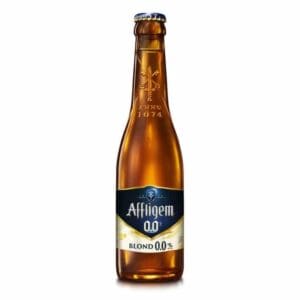
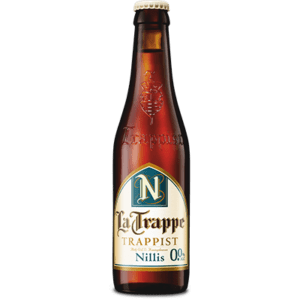
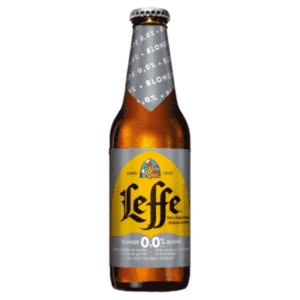
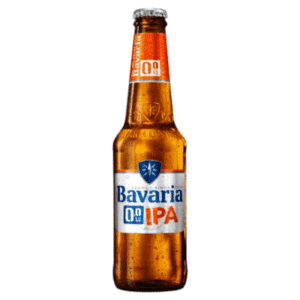
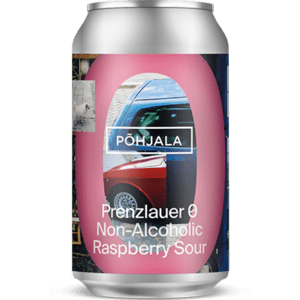
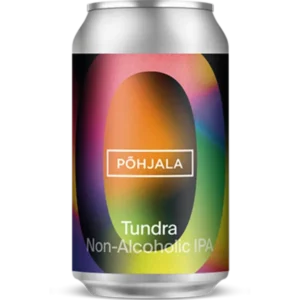
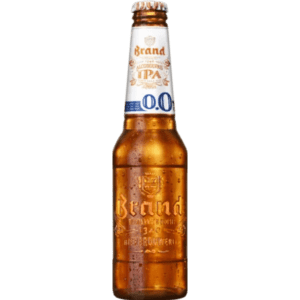
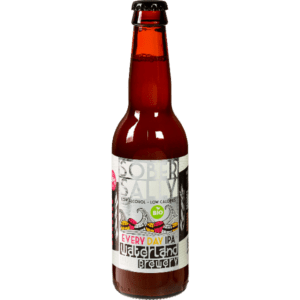
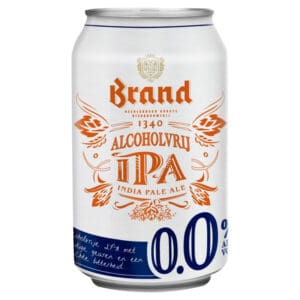
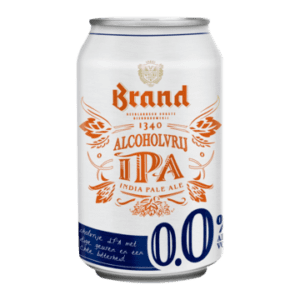
If you are looking for an IPA, check out Brand Bierbrouwerij BV IPA 0.0 and Brouwerij Bavaria 0.0 IPA; for a pilsner, look at Brouwerij Bavaria 0.0 Pilsener. Brouwerij Artois Leffe Blond 0.0 and Brouwerij Artois Leffe Bruin 0.0 are available in two beer colors . Furthermore, Bierderij Waterland Sober Sally, Brouwerij De Koningshoeven La Trappe Nillis 0.0, Põhjala Brewery Tundra, and Põhjala Brewery Prenzlauer 0.0 Raspberry Sour are in this category. The wheat beers and white beers in this category are listed in the questions below.
Frequently asked questions about alcohol-free beer
How do you choose an alcohol-free beer from this category?
Start by brewery and country. This category features beers from Brand Bierbrouwerij BV, Brouwerij Artois, Brouwerij Bavaria, Brouwerij Affligem, Põhjala, Brouwerij Lowlander, Bierderij Waterland, and Brouwerij De Koningshoeven, from the Netherlands, Germany, and Estonia; the German beers come from Erdinger Weißbräu, Paulaner Brauerei GmbH & Co, and Weihenstephaner Brauerei. Then filter by beer type: blond beer, brown beer, dark beer, India Pale Ale (IPA), pilsner, or wheat beer. If you want to be certain that it contains approximately 0,0% alcohol, choose a beer with 0.0% on the label.
Does a low-alcohol specialty beer of 2 to 4% also qualify as 'alcohol-free beer'?
No. According to the Commodities Act Decree on Reserved Designations, 'alcohol-free beer' may only be applied to beer with a maximum of 0,1 volume percent alcohol, and 'low-alcohol beer' to beer with more than 0,1 up to and including 1,2%. Nederlandse Brouwers refers to beers with 2 to 4% alcohol as low-alcohol (specialty) beers: these fall into neither category and are, according to the Alcohol Act, simply alcoholic beverages, because they contain more than 0,5%.
Why do some foreign 'alcohol-free' beers still list an alcohol percentage?
Because other countries apply different standards, Nederlandse Brouwers warns that foreign beers on the Dutch market may state 'alcohol-free beer' on the label while containing more than 0,1% alcohol; the advice is to always check the stated alcohol percentage. The Voedingscentrum adds: only if 0,0% is stated on the label do you know that it is truly alcohol-free.
Which wheat and white beers are in this category?
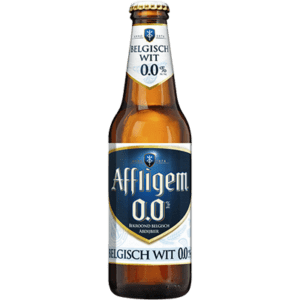
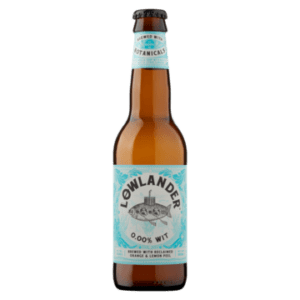
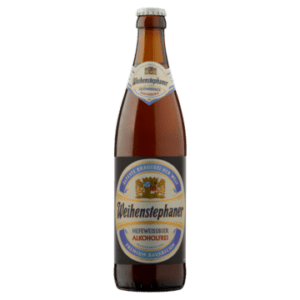
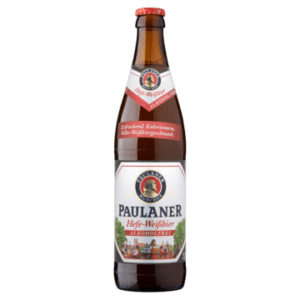
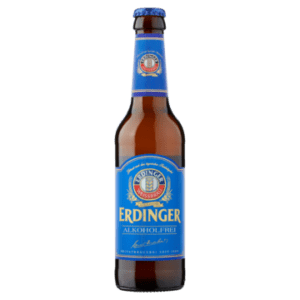
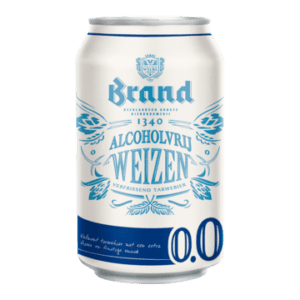
Wheat beers and white beers are both in this category. The wheat beers are Brand Bierbrouwerij BV Weizen 0.0 Alcohol-free, Erdinger Weißbräu Erdinger Alkoholfrei, Paulaner Brauerei GmbH & Co Paulaner Hefe-Weiss 0.0 Alcohol-free, and Weihenstephaner Brauerei Hefeweissbier Alkoholfrei. As for white beer, Brouwerij Lowlander 0,00% Wit and Brouwerij Affligem Belgisch Wit (0.0%) are in the category. The labels of the German beers state "Alkoholfrei"; the exact alcohol percentage is stated on that same label.
Why does '0.0%' or 'alcohol-free' appear next to the brand name in advertisements for alcohol-free beer?
This is stipulated by the Advertising Code for Non-Alcoholic Variants of Alcoholic Beverages (RvAVA) of STIVA, which has been in effect since April 1, 2024. Article 1 stipulates that no alcoholic beverage may be shown in such advertising and that a brand logo or brand name is only permitted if it is directly and unmistakably clear that it concerns a non-alcoholic variant, for example via '0.0%' or 'alcohol-free'.
How does alcohol-free beer retain its taste when the alcohol is removed?
That depends on the brewing method. With distillation, the beer is brewed with alcohol, and heating removes the alcohol; according to Dutch Brewers, aromas also evaporate in the process. To preserve the taste of the 0.0% beer, the aromas are removed from the brew during distillation and added back later. With the method using special yeast, as described by Jopen, the yeast produces as little alcohol as possible from the very beginning.